ServicesFlat Roofing
Flat Roofing in Youngtown
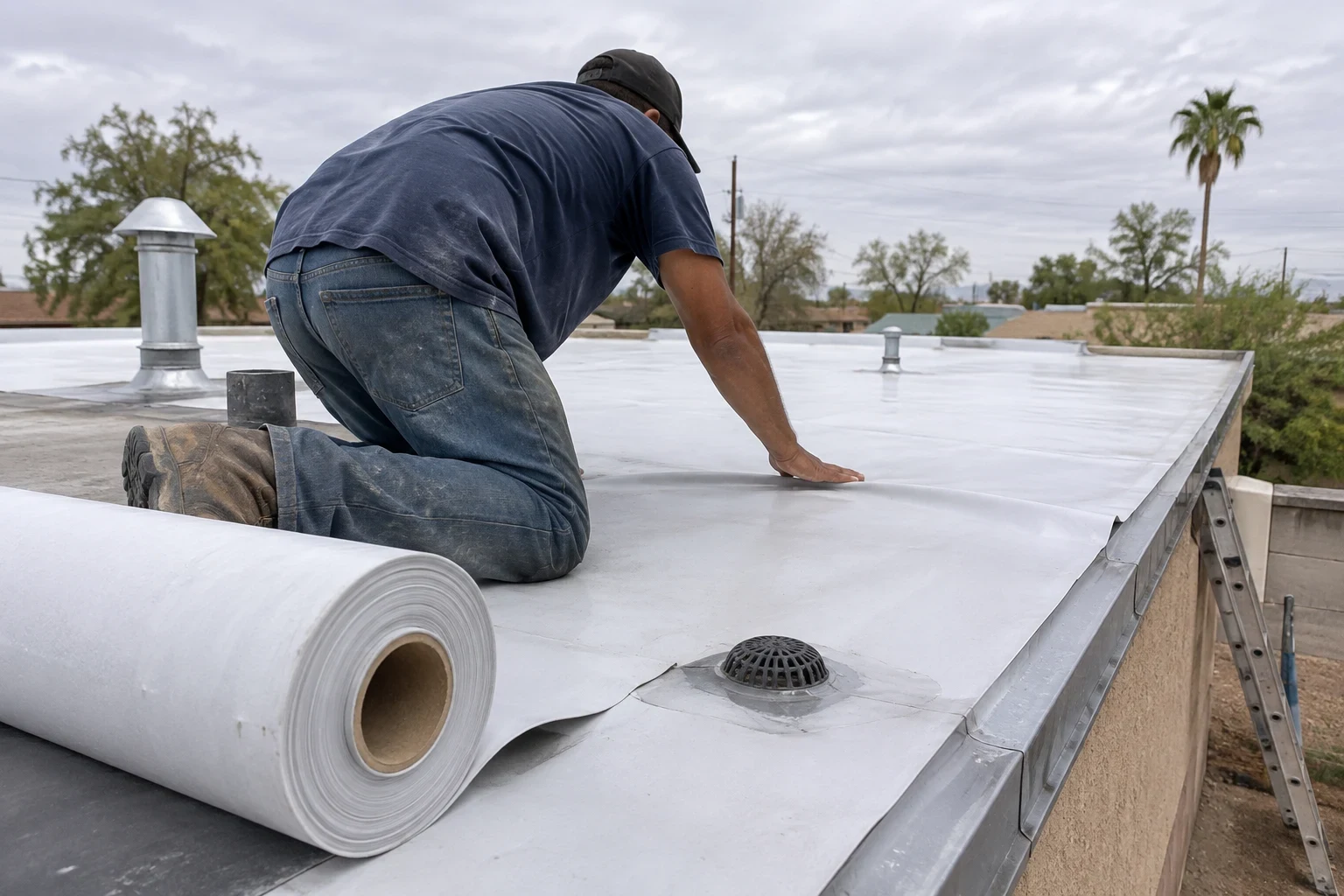
Modified bitumen, TPO and reflective coatings for low-slope roofs, laid over a sound deck with enough pitch to move water to the scuppers and flashing sealed up every parapet wall. Plants, stucco and AC units stay covered while we work, and the yard is raked and swept before we leave each evening.
What a Flat Roof Needs to Last
A flat roof is never perfectly flat. It needs a slight pitch, usually built into the deck or added with tapered insulation, so water runs to the scuppers or drains instead of sitting in place. Most flat roof failures start where that slope breaks down or where the membrane meets something else: a parapet wall, a vent stack, an AC curb or an old swamp cooler stand.
Summer sun breaks down asphalt and dries out older built-up roofs. Daily heating and cooling also pulls at every seam. When monsoon rain lands on a membrane that has cracked or lifted, water finds the gap quickly. We pick a system for how your roof actually drains and what sits on it, then flash every penetration so the weak points are covered.
Flat roofing makes sense for patio covers, carports, additions and whole homes built with low-slope roofs. If you are weighing spray foam instead, our Foam Roofing page explains how that system differs.
What Our Flat Roofing Work Includes
Membrane options explained
We install two-ply modified bitumen, single-ply TPO and elastomeric coating systems. We explain how each one handles heat, foot traffic and ponding on your roof, so you choose with the tradeoffs in front of you.
Deck and slope correction
Once the old roof is off, we replace soft or rotted sheathing. Where water has been ponding, we add tapered insulation or crickets so it moves toward the drains.
Parapet and penetration flashing
We run base and counterflashing up parapet walls. Vent pipes, roof jacks and equipment curbs get new flashing sealed into the membrane, since these joints leak first.
Scupper and drain detailing
Scuppers are relined and sealed into the membrane, and drains are cleared and set at the low points. Clearing the water is the whole job of a flat roof.
Protection and daily cleanup
Tarps go over plants and gravel beds, and plywood covers AC condensers and walkways. We bag debris as we tear off, run a magnetic sweep for nails each evening and haul everything away.
Signs Your Flat Roof Needs Attention
- Ponding that outlasts the storm
- Standing water that remains two or three days after monsoon rain means the slope or the drains have stopped working. The membrane beneath a puddle ages faster for every day it stays wet.
- Blisters and alligator cracking
- Raised bubbles point to trapped moisture or a membrane that has lost its bond. A fine web of cracks shows the asphalt has baked dry under UV.
- Stains below walls or vents
- A ceiling stain under a parapet, swamp cooler stand or vent pipe usually comes from failed flashing at that joint, not from the open field of the roof.
- Seams pulling apart
- Lifted laps on modified bitumen or open welds on TPO give wind-driven rain a path under the membrane.
- Soft spots underfoot
- Decking that flexes when you step on it has probably soaked up water. A patch on top only covers the rot.
How a Flat Roof Job Runs
- 1
Assessment and written estimate
We walk the roof, probe the seams and flashing, and check for soft decking. You get a line-item estimate with photos of what we found, plus a straight recommendation: repair if the roof has years left in it, replacement if it doesn't.
- 2
Setup and protection
Before tear-off, we cover landscaping, shield the AC equipment and pad the parapet edges where materials come up. Where the city requires a reroofing permit, we pull it.
- 3
Tear-off and deck repair
We strip the old layers down to the sheathing, replace damaged boards and correct the slope. Debris goes straight into the trailer, not onto your lawn.
- 4
Membrane and flashing
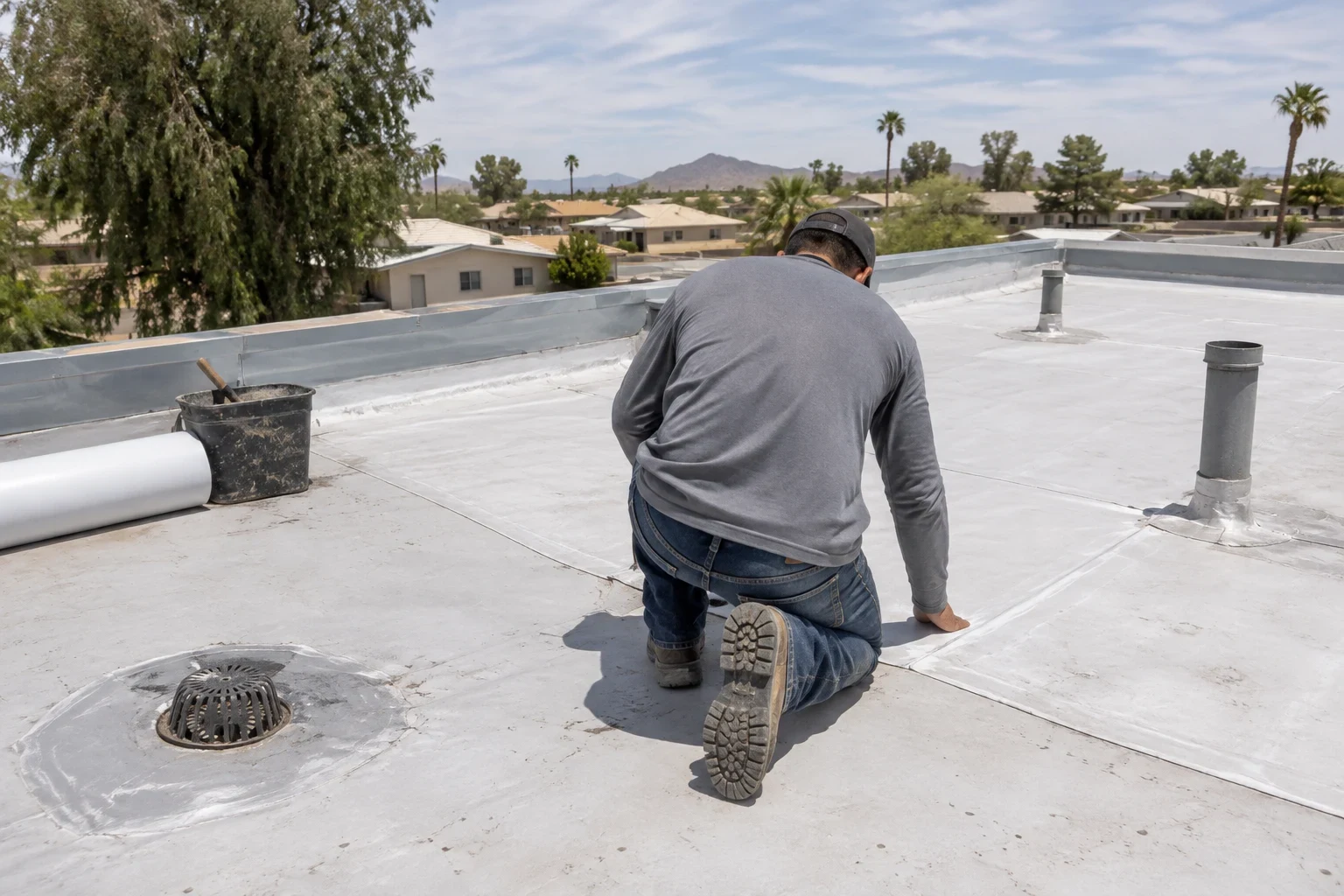
The base sheet and cap sheet, or the TPO membrane, go down with the seams lapped toward the drains. Parapets, penetrations and scuppers are finished last.
- 5
Final sweep and walkthrough
We roll magnets across the yard and driveway, wash down the walkways and walk the finished roof with you.
What Moves the Price of a Flat Roof
Every flat roof gets priced from its own measurements and the condition we find up there. Your written estimate breaks out materials, labor, deck repair and haul-away on separate lines, so nothing is folded into one vague number. These are the factors that shift the total most.
- Square footage and roof sections
- Overall area sets the baseline. A home with several separate low-slope sections costs more than one open roof of the same size, because each section adds its own edges, corners and flashing.
- Which membrane system
- Recoating a membrane that is still well adhered costs far less than a full tear-off. Modified bitumen and TPO each come with different material and labor costs.
- Deck condition and slope correction
- Rotted sheathing and tapered insulation to cure ponding both raise the price. Hidden deck damage only shows once the old layers come up, so we list board replacement as a per-sheet figure and bill only for the boards we actually swap.
- Penetrations and rooftop equipment
- Each AC curb, vent pipe, skylight and cooler stand needs its own flashing detail. Lifting or relocating equipment to roof underneath it adds labor time.
- Old layers to strip
- When two or three previous roofs are stacked on the deck, tear-off takes longer and the disposal loads get heavier.
Flat Roofing Questions
- Should I choose modified bitumen or TPO?
- Modified bitumen is thick, stands up to foot traffic and is easy to patch. TPO is a white single-ply sheet that reflects heat and has heat-welded seams. If you or a technician walk the roof often to service equipment, bitumen usually fits better. If keeping heat out of the rooms below matters most, TPO is the stronger choice.
- Is a coating an option for my roof, or does it need to be replaced?
- That depends on what sits under the surface. A coating only makes sense when the existing membrane is still stuck down tight and the deck below it is dry. If we find soft spots, wide blisters or several old layers, a coating would just seal the problem in, and we will tell you that plainly.
- What warranty comes with a new flat roof?
- The roofing materials we install carry a 30-year manufacturer warranty through the material providers. We go over which products it covers when we write your estimate.
- How messy is a flat roof tear-off?
- Old built-up roofs shed gravel, tar chips and nails, so we plan for it. Tarps go down before we start, debris is bagged and loaded as we work, and we sweep and magnet the yard every evening. By the time we leave, the yard should look as it did before we arrived.
- Do you work on flat roofs outside Youngtown?
- Yes. We also do flat roofing in Sun City, El Mirage, Peoria, Surprise and the other nearby towns listed on our Service Areas page.
Get Your Flat Roof Draining Again
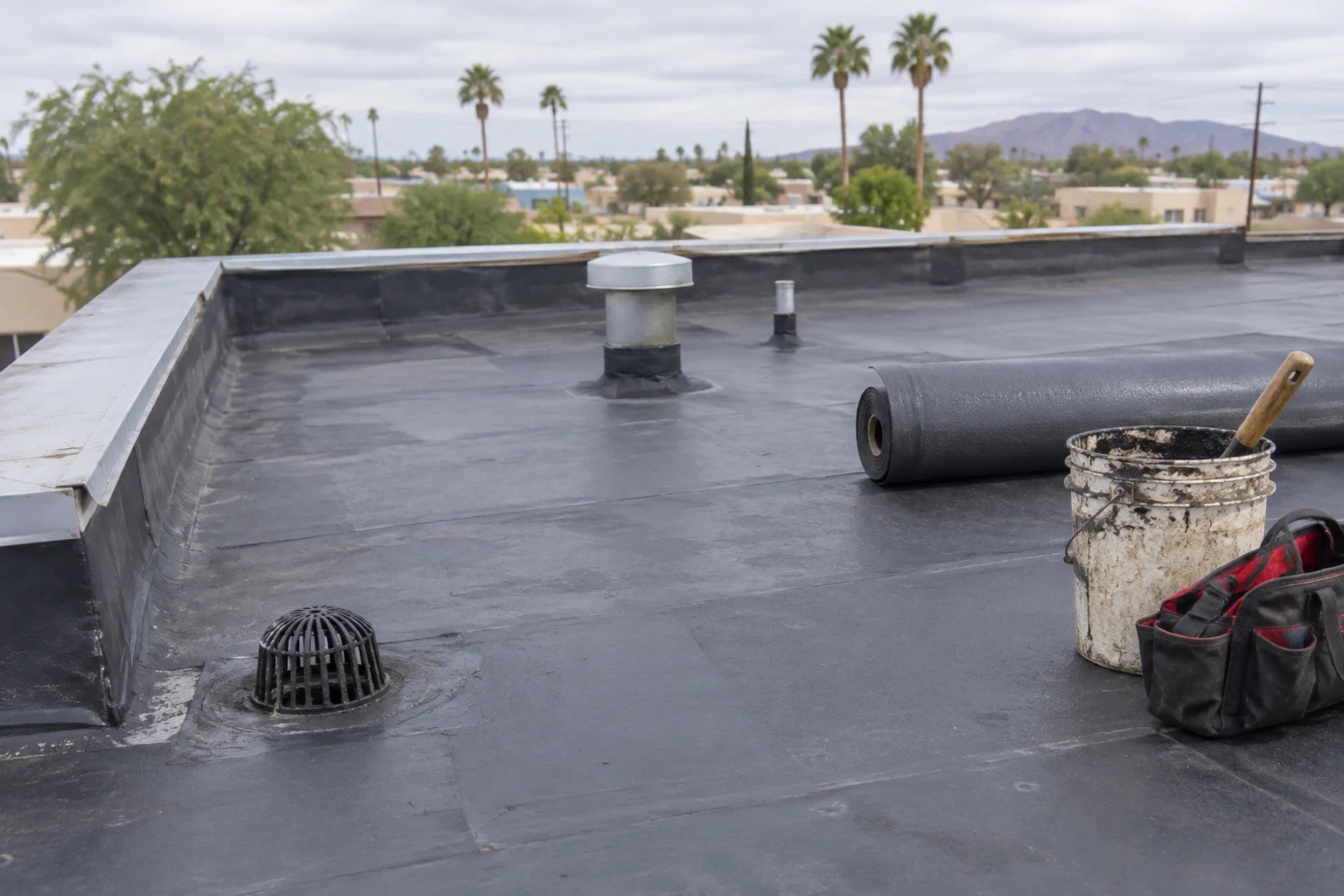
Tell us where the water stands or where the stains show up. We will set a time to look at the roof and go over your membrane options with you.