ServicesTile Roofing
Tile Roofing in Youngtown
Concrete and clay tile can outlast the paper beneath it by decades. We replace worn underlayment, reset slipped or cracked tile and install new tile roofs. We protect your home and yard while we work and clean up before we leave each day.
What Actually Keeps Water Out of a Tile Roof
Tile is a sun and wind shield, not the waterproof layer. Water gets under concrete and clay tile at every lap and joint. The underlayment below it carries that water down to the eave. Once that underlayment dries out, cracks or tears at the nail holes, a roof with perfectly good tile starts to leak.
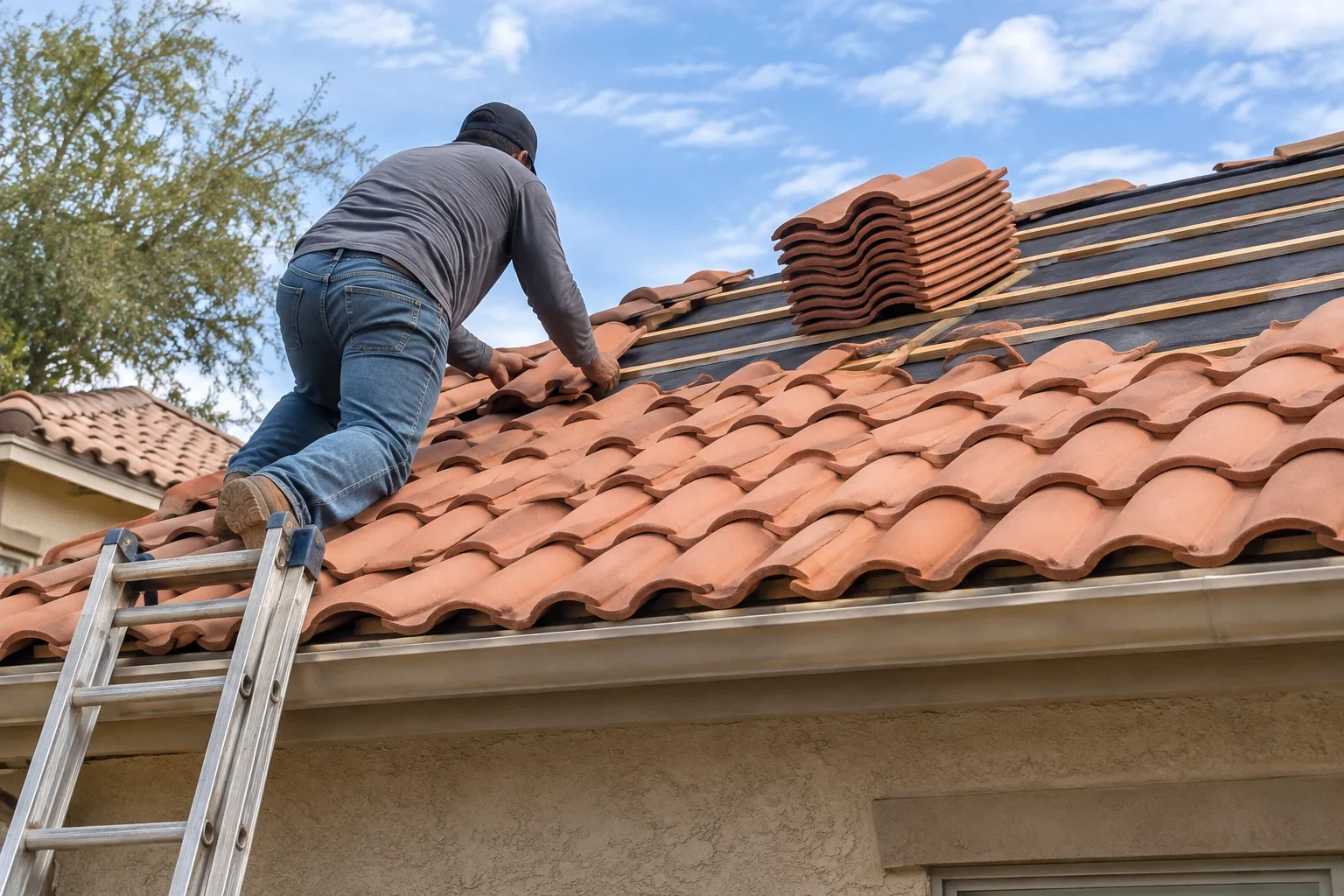
That is why most tile work we do is a lift and relay. We take the tile off and stack it, replace the underlayment and flashings, then lay the same tile back down. Months of hard sun in the Valley bake older felt underlayments brittle. That makes the layer under the tile the part that usually needs attention.
When tile itself is the problem, we deal with that too. That covers cracked pieces from foot traffic, slipped courses from failed fasteners, or a profile that is no longer made. We also install complete new tile roofs. If your roof is low-slope or flat, our flat roofing and foam roofing pages cover those systems instead.
What Our Tile Roofing Work Covers
- Underlayment replacement
- We remove the old felt down to the deck and install new underlayment, lapped and fastened to the manufacturer's spec. This is the layer that actually stops water, so we do not cut corners on laps at valleys and walls.
- Tile lift and relay
- Field tile is removed, inspected and stacked on the roof or on padded staging. Sound pieces go back on. Cracked ones are set aside and replaced with matching tile.
- Battens and fasteners
- Where battens have rotted or fasteners have backed out, we replace them. Correct batten spacing keeps each course hanging straight and stops tile from creeping down the slope.
- Flashing, valleys and penetrations
- We replace valley metal, step and headwall flashing, and the pipe and vent flashings that come through the tile. Most leaks on tile roofs start at one of these points, not in the open field.
- Eave closures and bird stop
- New eave risers and bird stop close the open ends at the first course. That keeps pigeons and debris out from under the tile, where nesting material holds water against the underlayment.
- New tile installation
- For a full new tile roof, we install new concrete or clay tile over a new underlayment system. That work carries a 30-year manufacturer warranty through the roofing material providers.
Signs Your Tile Roof Needs Work
Ceiling stains after monsoon rain
A tile roof can shed light rain and still leak in a heavy downpour. If stains show up only after big storms, the underlayment or a valley is usually letting water through.
Cracked or slipped tiles
Broken corners, split pieces or a tile hanging lower than its neighbors leave the underlayment exposed to direct sun. It breaks down quickly once that happens.
Brittle felt at the eaves
Lift an eave tile and look at the paper underneath. If it flakes, crumbles or has holes, the rest of the roof is likely in similar shape.
Birds under the first course
Nesting debris at the eaves means the bird stop is missing or failed. Packed material traps moisture and blocks water from draining off the underlayment.
Rust or gaps at flashings
Rusted valley metal, lifted headwall flashing or cracked sealant around pipes are common entry points for water. They are worth fixing before the deck beneath starts to soften.
How a Tile Roofing Job Runs
- 1
Estimate visit
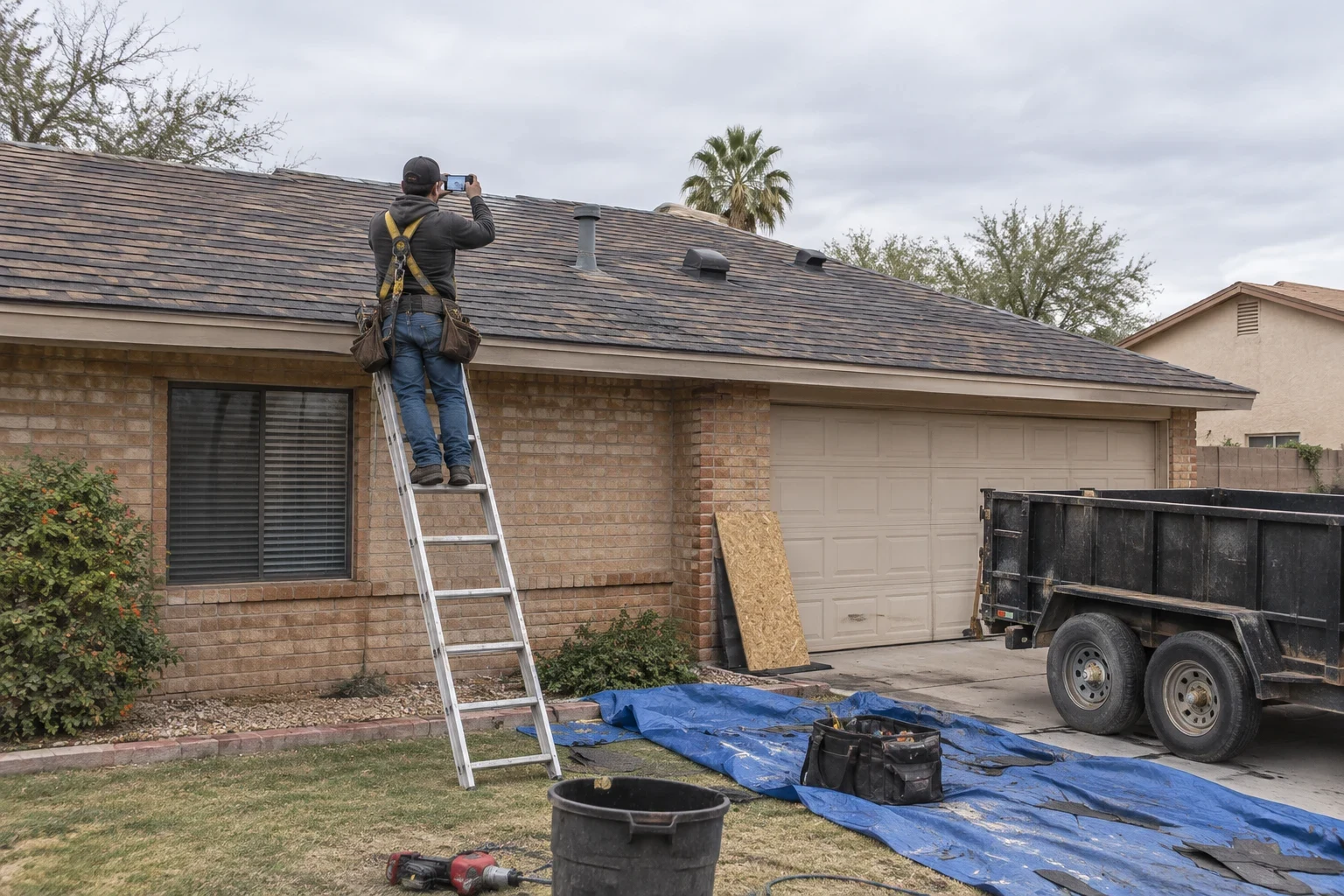
We walk the roof on the batten lines so we do not crack tile. We lift sample pieces to check the underlayment and take photos of what we find. You get a written estimate that separates labor, underlayment, flashing and any replacement tile.
- 2
Protecting the property
Before any tile comes off, we cover shrubs, AC units and pool equipment with tarps. We lay protection on walkways and place the dumpster where it will not damage the driveway. We also pull the permit where your city requires one.
- 3
Tear-off and staging
Tile is stacked on the roof in balanced loads or on padded staging, and old underlayment goes straight into the dumpster. Debris is cleared from the ground at the end of every workday, not just on the last one.
- 4
Underlayment, flashing and relay
New underlayment, battens, valley metal and flashings go on, then the tile is relaid course by course. Hip and ridge tile is set and fastened last.
- 5
Final cleanup and walkthrough
We pull the tarps, sweep the yard and driveway, and run a magnet over gravel and lawn for nails. Then we walk the property with you and show you photos of the finished details under the tile.
What Moves the Cost of Tile Roofing
Tile jobs are priced by the work under the tile as much as the tile itself. Two roofs the same size can differ a lot depending on what we find once the first courses come off. Our written estimate shows each part so you can see where the money goes.
- Roof area and pitch
- More square footage means more underlayment and labor. Steeper pitches need extra staging and fall protection, which slows the work.
- How much tile can be reused
- Reusing sound tile keeps material costs down. Heavy breakage, or a discontinued profile that has to be sourced or swapped across a whole slope, adds cost.
- Underlayment system
- Single-layer felt, two-layer systems and synthetic underlayments differ in price and in how well they hold up to heat. We explain the tradeoff before you choose.
- Deck and batten condition
- Soft or delaminated decking and rotted battens have to be replaced before new underlayment goes down. We photograph any of this and review it with you first.
- Flashings and penetrations
- Each valley, chimney, skylight and roof vent adds flashing work. Roofs with many cut-ups take longer than simple gable roofs.
Tile Roofing Questions
Something not covered here? (623) 264-3156
Will my old tiles go back on the roof?
In most cases they do. Clay and concrete pieces commonly hold up far longer than the felt or synthetic layer under them, so any tile without cracks is relaid once the new underlayment is down. A few always break as they come off, and we swap those for pieces in the same profile and color.
Why does my roof leak when the tiles look fine?
Tile sheds sun and most of the rain, but it is not the waterproof layer. Water slips under it at every lap and joint, and the underlayment beneath carries it down to the eave. When that layer cracks or wears thin at the nail holes, water reaches the deck while the tile still looks perfect from the street.
What warranty comes with a new tile roof?
A new tile roof we install carries a 30-year manufacturer warranty through the roofing material providers. We walk through what that coverage includes when we go over your estimate.
Can I go from shingles to tile?
Sometimes. Tile weighs several times more than asphalt shingles, so the rafters or trusses have to be able to carry that load. We look at the framing before recommending the switch. If tile is not a good fit for your home, our shingle roofing page covers the alternative.
How do you keep my yard and gravel clean during the job?
Before any tile comes off, tarps go over plants, AC units and pool equipment. Tile is stacked on the roof or on padded staging and is never tossed onto landscaping. At the end of each workday the crew picks up loose debris and runs a magnetic sweeper across the gravel, lawn and driveway to catch stray nails.
Get a Clear Answer on Your Tile Roof
Tell us what you are seeing, whether that is a stain, a cracked tile or an older roof you want checked before monsoon season. We will set up a visit and give you a written, itemized estimate.