ServicesNew Roof Installation
New Roof Installation in Youngtown
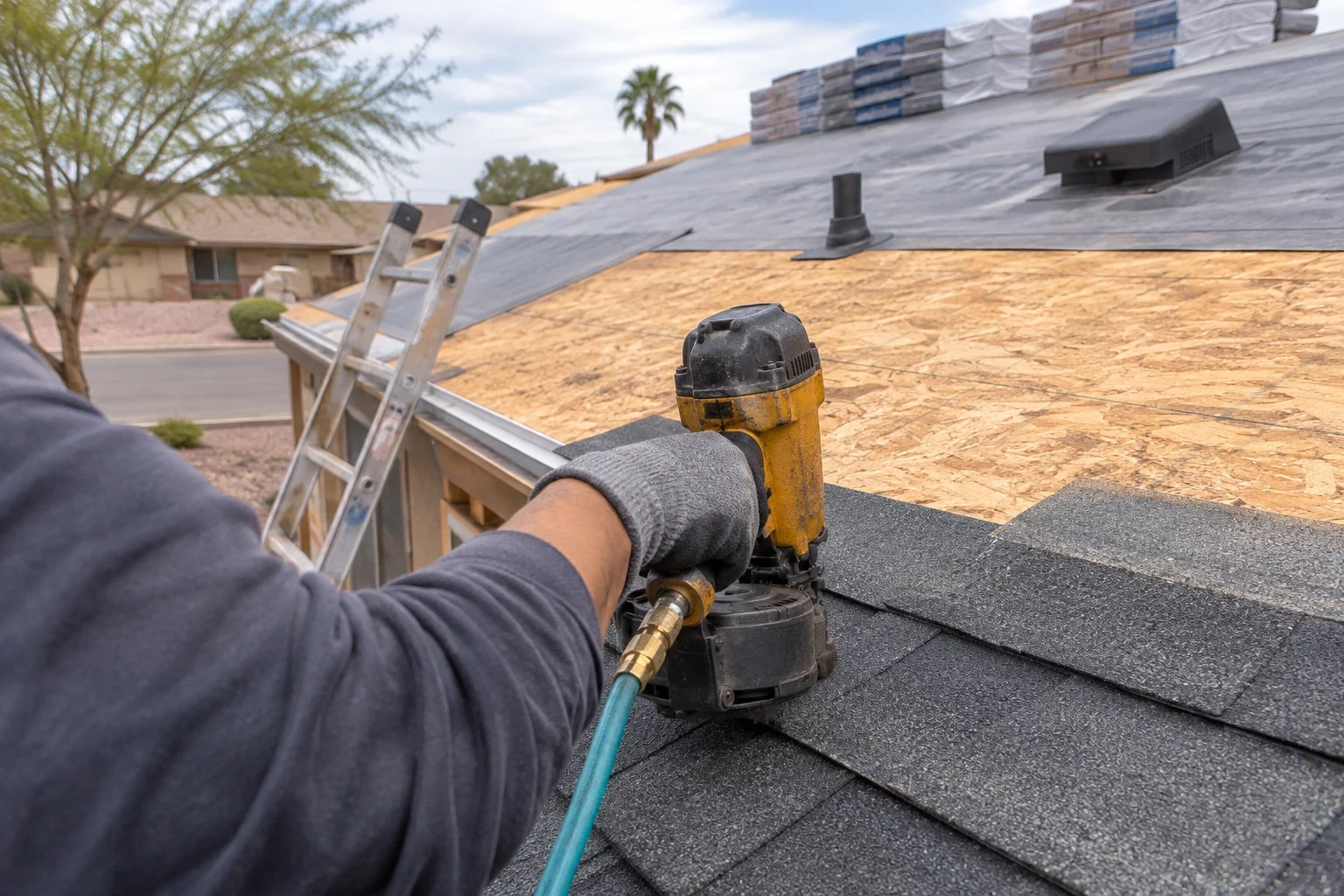
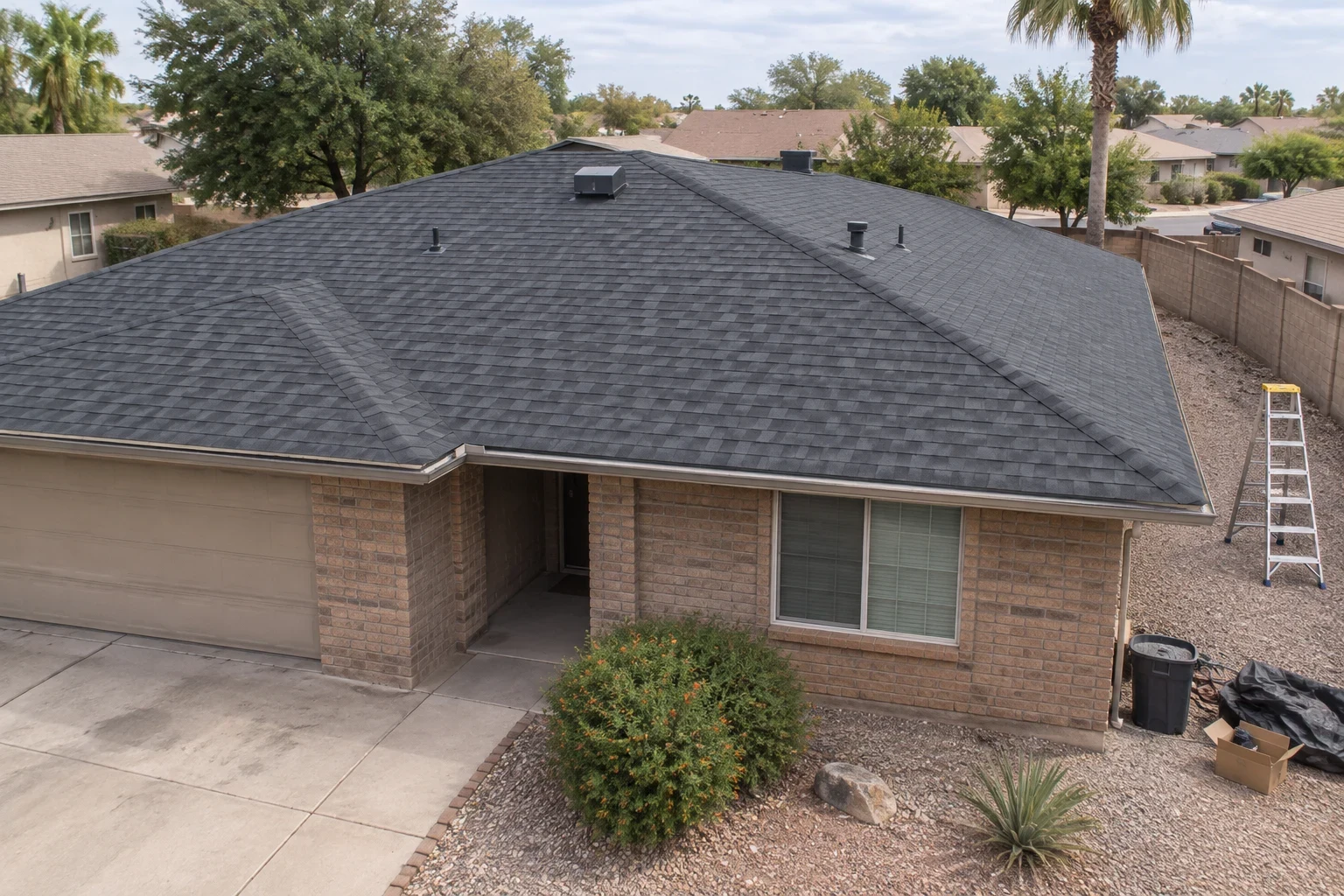
We install complete roof systems on additions, rebuilt homes and new structures. That covers sheathing, underlayment, flashing, ventilation and the finished tile, shingle or foam surface. Every workday ends with the yard swept, loose nails picked up by magnet and materials stacked away from your doors.
When a new roof installation is the right call
A new roof installation starts with no old roof to work around. The framing is new or fully exposed, so we build every layer to current code: decking, underlayment, drip edge, valley and wall flashing, attic ventilation, then the roofing material. It fits a room addition, a casita or detached garage, a home rebuilt after a major remodel, or any structure whose roof has been completely removed.
If you have an existing roof that is simply worn out, our Roof Replacement page covers tear-off and what comes with it. If only one area is leaking or damaged, Roof Repair is usually the better place to start.
Summer heat cycles every layer of a roof hard. That is why we choose the underlayment and plan the ventilation before we talk about the visible surface. Those two parts decide how long the rest of the roof lasts.
What the installation includes
- Deck and sheathing check
- We confirm the plywood or OSB is nailed on the correct schedule, gapped for expansion and flat across the trusses. A wavy deck telegraphs through shingles and can leave tile rocking on its battens.
- Underlayment matched to the material
- Under tile, the underlayment is the real water barrier and the tile mostly shields it from UV, so we use a heavy, high-temperature product. Under shingles we lay synthetic underlayment with self-adhered membrane in valleys and around penetrations.
- Flashing and tie-ins
- Drip edge, step and counter flashing at walls, pipe jacks and valley metal all go in as the layers go down, not afterward. Where an addition meets your existing roof, we cut back and weave the new materials into the old so water sheds over each seam instead of into it.
- Balanced attic ventilation
- Intake at the eaves and exhaust at the ridge or through off-ridge vents, sized to the attic volume. Moving that heat out keeps shingles from cooking from below and lowers the load on your AC.
- The finished surface
- Concrete or clay tile, architectural shingles, or spray foam with an elastomeric coating on low-slope sections. Our Tile Roofing, Shingle Roofing, Foam Roofing and Flat Roofing pages go deeper on each one.
- Daily cleanup and protection
- Tarps cover planting beds and the AC condenser, and walkways stay clear. Each evening we run a magnetic sweeper over the driveway and yard and load scrap straight into the trailer.
Signs you need a new roof built, not repaired
You are adding square footage
A bedroom, garage conversion or enclosed patio needs its own roof framed, sheathed and tied into the existing one.
The framing is bare
New trusses or sheathing with nothing on them need a full roof system before the first monsoon rain arrives.
The old roof was removed for a rebuild
After a major remodel or structural repair, the roof goes back on as a new installation built to current code.
A detached structure is going up
Casitas, workshops and garages each need underlayment, flashing and ventilation sized to the building, not leftovers from the main house.
How an installation runs, from first call to final sweep
- 1
Phone call and on-site measurements
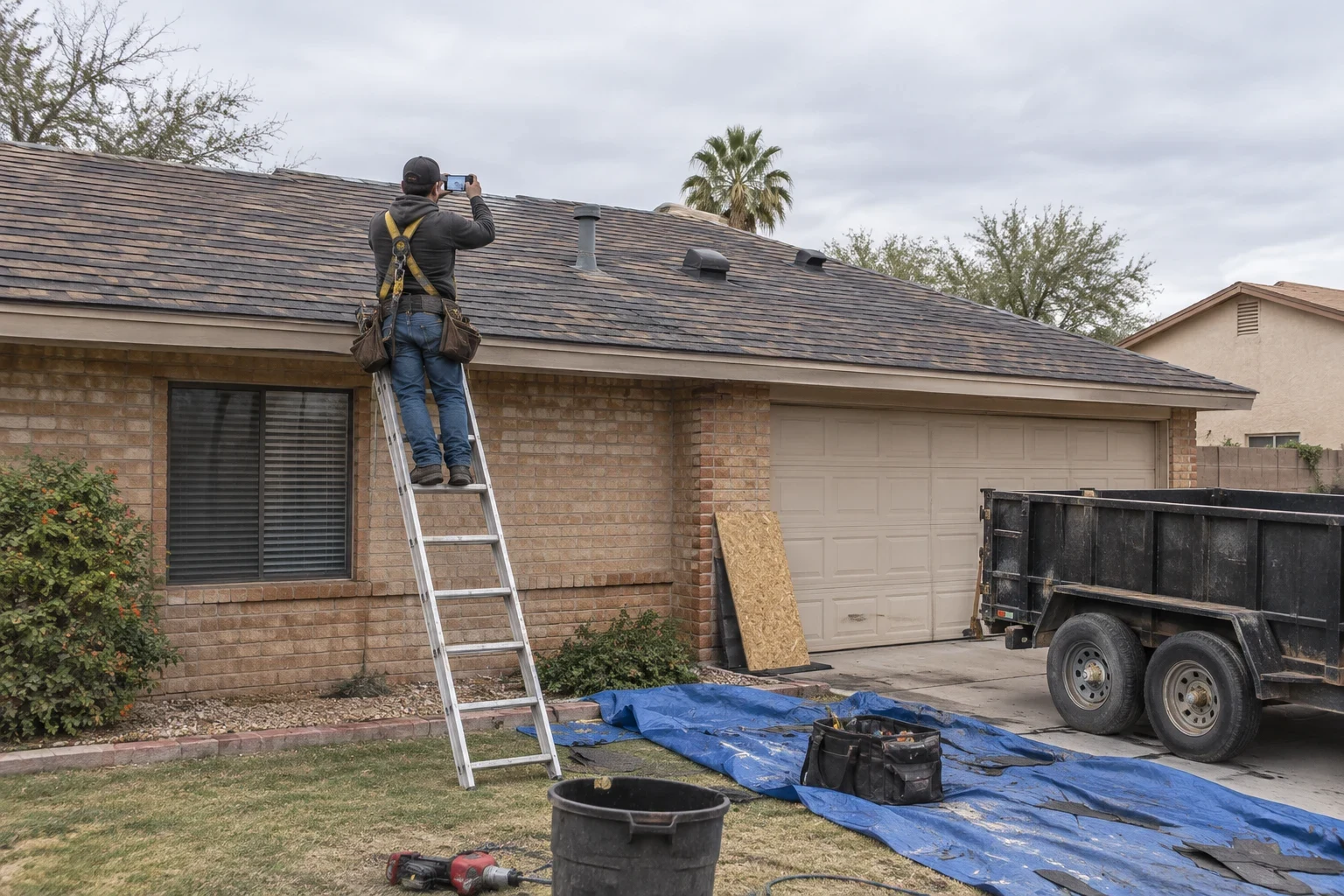
We talk through the structure, the pitch and the material you are considering. Then we measure in person and note the tie-ins, penetrations and access for the material drop.
- 2
Estimate and permit
Our written estimate names every layer and product going onto your roof, each priced on its own. Where a roofing permit is required, we pull it and handle the city sign-offs.
- 3
Protect the property
Before the first bundle goes up, we cover landscaping and the condenser, set plywood where material lands and keep doors and walkways usable.
- 4
Build the layers
Deck prep, underlayment, flashing, vents, then the surface. Any section left overnight is dried in, and the yard is swept before we leave.
- 5
Final walk and warranty paperwork
We do a last magnetic sweep and walk the property with you. We also register your materials so the 30-year manufacturer warranty through the roofing material providers is on file.
What moves the cost of a new roof
Your price depends on how much roof there is, what goes on it and how much detail work the structure calls for. We break each of those out separately on the written estimate. You see what every part of the job costs before any material is delivered.
- Roof area and slope
- We measure the total surface in person and order materials against that number, so a bigger footprint means more underlayment, flashing and finish material. A steep slope needs more fall-protection setup and slower, more careful footing. Both add labor hours.
- Material choice
- Tile weighs more and takes more labor than shingles, and the framing may need to be checked for the extra load. Foam on low-slope sections is figured by its applied thickness and the coating system on top.
- Tie-ins and penetrations
- Every valley, wall flashing, skylight and vent pipe adds hand work. An addition that joins an existing roof takes more than a freestanding casita.
- Deck readiness
- If the sheathing needs re-nailing, shimming or replacement before we start, that work shows up as its own entry on the estimate.
- Permit and season
- Permit fees vary with the project. During peak summer heat we start early and stop early, which can stretch a schedule.
New roof installation questions
Something not covered here? (623) 264-3156
How is a new roof installation different from a roof replacement?
A replacement starts with tearing off an existing roof and dealing with whatever is found under it. A new installation goes onto new or fully exposed framing, so there is no tear-off. If your home already has a roof that is failing, Roof Replacement is the page you want.
Can you match the roof on my addition to my existing roof?
Usually, yes. We identify the existing tile profile or shingle line and color and source the closest match. Older tile colors are sometimes discontinued, so we will tell you plainly if an exact match is not available and show you the nearest options.
How do you keep the tie-in to my existing roof from leaking?
We remove the old material back past the joint and run new underlayment under the existing layers. Then we lap flashing so every seam sheds water downhill. Tie-ins are the most common leak point on additions, so we never just caulk the joint.
What warranty comes with a new roof?
The roofing materials we install carry a 30-year manufacturer warranty through the roofing material providers. We register it at the end of the job and give you the paperwork.
Will my yard be a mess for days?
No. Scrap goes into our trailer as we work, and the driveway and yard get a magnetic sweep every evening. When the job is finished, we do one more sweep and walk it with you.
Planning an addition or a new build?
Tell us about the structure, the pitch and the material you have in mind. We will set up a time to measure and then go over your quote by phone.