ServicesRoof Replacement
Roof Replacement in Youngtown, AZ
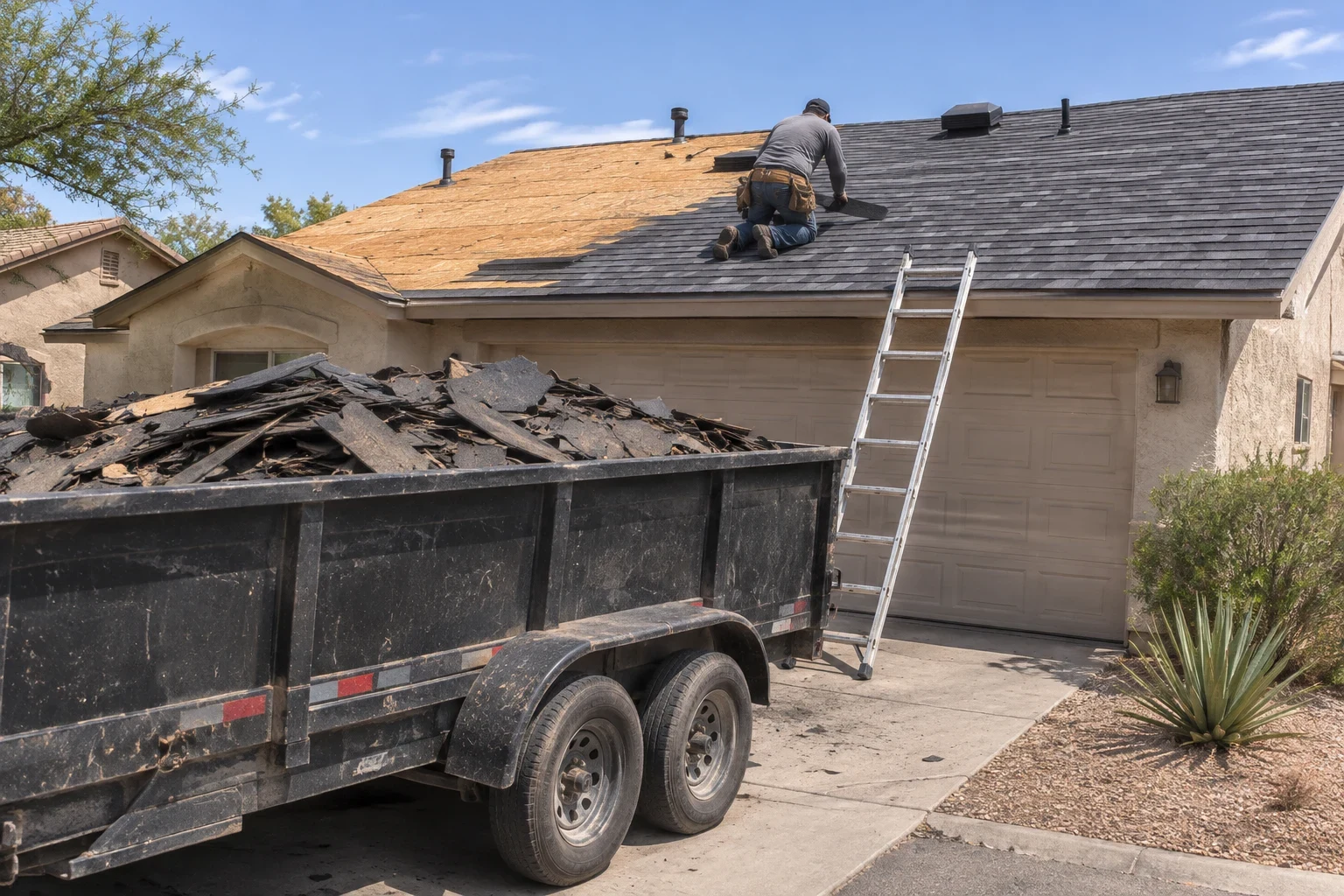
When the underlayment or shingles have worn out across the whole roof, patching only buys time. We strip your roof to the deck, fix what is underneath and install a new system. Tarps, plywood and a magnetic sweep every evening keep your home and yard protected.
When replacement is the right call
A replacement removes the whole roof system down to the deck, repairs damaged sheathing, and puts back new underlayment, flashing and roof covering. It makes sense when the waterproofing layer has failed across the roof, not in one spot. A cracked tile or a lifted shingle is a job for roof repair. Brittle underlayment under the entire field is not.
Under strong desert sun, the waterproofing usually gives out before the surface you can see. Asphalt shingles shed granules and their oils bake out, so they turn stiff and crack. Under concrete tile, the felt underlayment dries and splits, letting water track to the deck while the tiles above still look fine. We tell you which of these is happening and show you photos, so you decide with the facts in front of you.
Tear-off is messy by nature: old roofing, thousands of nails, dust and broken tile. We plan for that before the first shingle comes off, and we clean up at the end of every work day, not just the last one.
What a replacement with us includes
Strip to the sheathing
Every layer of old roofing, felt and metal comes off until bare sheathing shows. Going over the top of an old roof would hide deck damage and put extra dead load on the rafters, so we do not do overlays.
Deck repair, shown first
Once the sheathing is open, we swap out delaminated plywood, soft spots and rotted boards along the eaves. You see photos of what we found, and we check with you before replacing any sheathing beyond what the estimate covers.
New underlayment and metal
Underlayment suited to the covering going on top, along with new drip edge, valley metal, pipe jacks and wall flashing. Old flashing that has bent, rusted or pulled loose is often where a fresh roof starts leaking first, so we replace it instead of reusing it.
Attic ventilation that works as a pair
We confirm the intake vents at the eaves and the exhaust vents near the ridge are sized to work together. An attic that holds heat bakes underlayment and shingles from underneath and cuts years off a roof that is otherwise sound.
The right roof covering
We install tile, shingle, foam and flat roof systems, and we explain which one fits your roof's slope and framing. The materials come with a 30-year manufacturer warranty through the roofing material providers.
Cleanup every day
Old roofing drops straight into the dumpster instead of piling on the lawn. Each evening a magnetic sweeper covers the driveway, grass and gravel beds, and rock landscaping gets extra passes because nails settle between the stones.
Signs your roof needs replacing, not patching
- Water marks in more than one room
- One ceiling stain usually points to one failed spot, such as a pipe jack or a cracked tile. Marks spread across separate rooms suggest the underlayment is failing roof-wide.
- Bald, cupped or brittle shingles
- When shingles lose granules, curl at the edges or crack when bent, the oils that kept them flexible have baked out. Granules collecting on the patio after rain are often the earliest clue.
- Good tile over worn-out felt
- Concrete and clay tile can outlast the felt beneath it by decades. Felt at the eaves that crumbles when you touch it means the tile must come up so new underlayment can go down.
- Foam showing through the coating
- When a foam roof's coating wears thin and the foam turns brown, spongy or pitted, recoating is no longer enough.
- A deck that dips or flexes
- Sagging between rafters or a spongy feel underfoot points to soaked sheathing that no surface patch can fix.
- A repair every season
- When the roof needs fixing year after year, that money does more toward a roof that stops the cycle.
How a replacement job runs
- 1
Measurements and a written scope
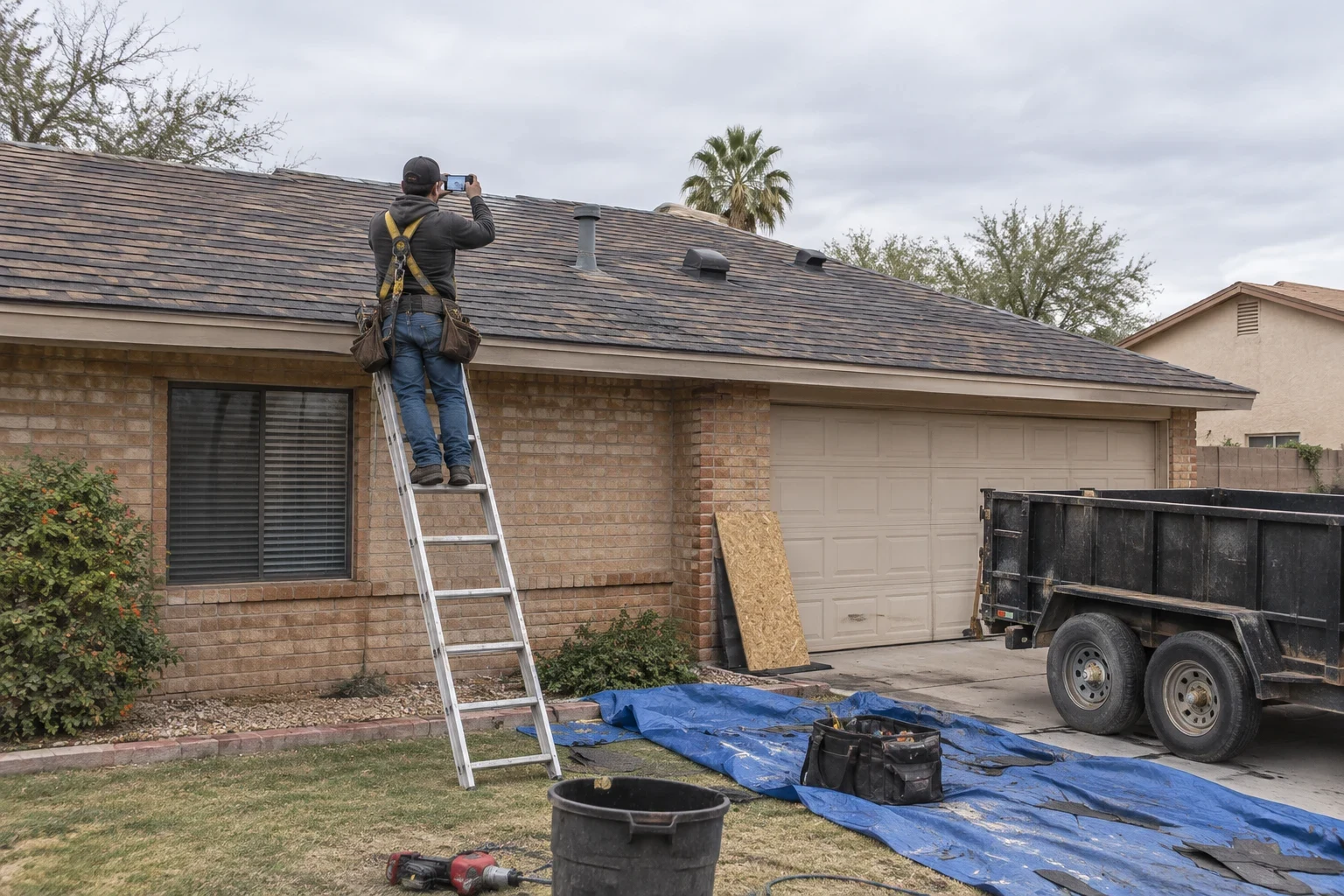
We get up on the roof, check the attic and take measurements. Your line-item estimate spells out materials, underlayment, flashing and the per-sheet rate for any deck repair, so no charge shows up later without a reason behind it.
- 2
Permits and the calendar
If the city calls for a permit on your job, we file for it, then order materials. Summer work starts at first light, and in monsoon season we plan each day so no bare deck is exposed when afternoon storms build.
- 3
Covering what is below
Before the first layer comes off, shrubs and the AC condenser go under tarps, plywood leans against windows and walls under the eaves, and the dumpster sits on plywood so it does not mark the driveway. Tear-off vibration can loosen wall hangings, so we suggest taking pictures down beforehand.
- 4
Tear-off and dry-in
Each day we strip only the area we can cover with new underlayment before quitting time. Your home is sealed every night.
- 5
Install, final sweep and walk-through
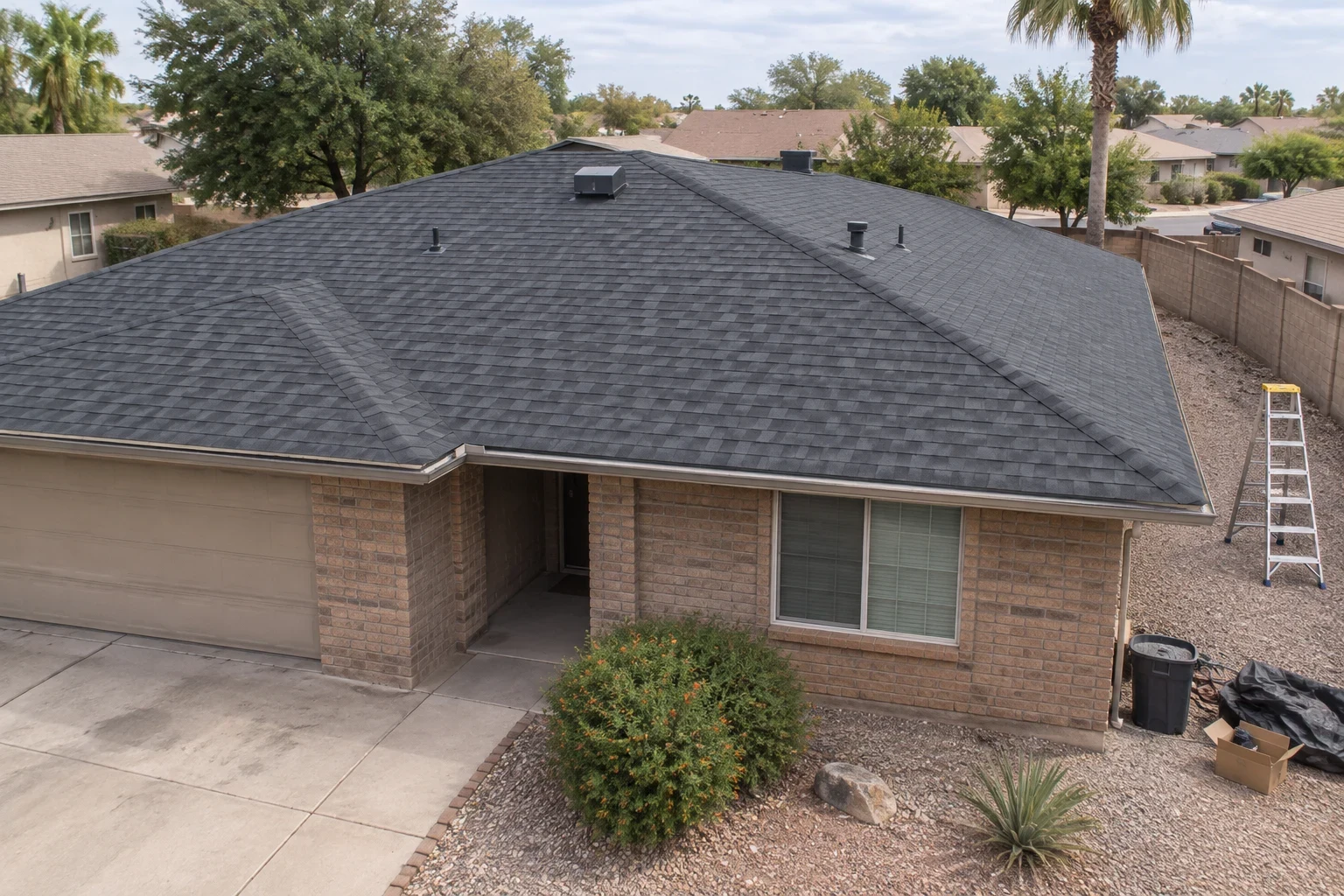
The new covering goes on, the dumpster leaves, and the property gets one last magnetic sweep. Then we walk the yard with you and hand over photos of the deck, flashing and finished roof.
The cost drivers behind a replacement
Two houses on the same street can need very different roofs, so we work from measurements taken on yours and from what we see in the attic. Your number comes in writing after that visit, never as a phone estimate. These are the factors that shift it most.
- Squares and pitch
- Total roof area, counted in squares, sets the material order. A steeper pitch adds fall-protection rigging and slows the crew's footing, which raises labor.
- The covering you pick
- Tile, shingle and foam differ in both material cost and hours to install. Reusing sound concrete tile can trim the material line, but every piece has to be lifted, stacked and reset by hand, which adds crew time.
- Condition of the sheathing
- Rot and delamination in the deck are invisible until tear-off exposes them. That is why the per-sheet replacement rate is written into your estimate before any work starts.
- Layers and penetrations
- Stripping two old layers takes longer than stripping one. Skylights, chimneys, valleys and plumbing vents each get their own flashing, and each adds labor.
- Permit fees and disposal
- The permit fee and the weight of debris hauled away are both part of the total. Old tile weighs far more than shingle, so its disposal costs more.
Roof replacement questions
- How many days does a replacement take?
- It depends mostly on roof size and the covering. A single-story shingle roof usually finishes sooner than tile, because tile is handled piece by piece. The expected schedule is written into your estimate, and if weather changes it, we call you right away.
- Can my existing concrete tile go back on?
- Often it can. Sound concrete tile gets lifted, stacked on the roof and laid back over fresh underlayment. We budget for some breakage and find the nearest available match, and if your tile is too brittle to survive handling, you hear that from us before the job begins.
- What if the decking turns out to be rotten?
- We stop on that section, photograph the damage and show you. Replacement sheathing is billed at the per-sheet rate already listed in your estimate, so you know the cost before a single board is swapped.
- Do I need to be home during the job?
- No. Many homeowners go to work as usual; we only ask that you answer your phone during the day. Leave room on the driveway for the dumpster, and plan to keep pets indoors or away, since tear-off is noisy.
- Will I find nails in my yard or rock beds afterward?
- Tear-off always sends some nails flying, and gravel hides them well. We tarp the beds before starting, run a magnetic sweeper each evening and do a final pass after the dumpster is hauled away.
- What warranty comes with the new roof?
- The roofing materials we install are covered by a 30-year manufacturer warranty through the roofing material providers. We walk you through what that coverage includes for the specific product going on your home.
Find out what your roof actually needs
Describe what you have noticed and we will arrange a time to come out, measure the roof and check the attic. You receive a line-item estimate in writing along with our plan for keeping your home and yard protected while we work.