ServicesRoof Repair
Roof Repair in Youngtown
Most leaks start somewhere other than the stain you can see. We follow the water back to its entry point, repair that area with materials that match your roof and clean the work area each day. You hear exactly which part failed and the reason it gave out.
Repairing the source, not the symptom
The stain on your ceiling is seldom right below the hole. Water gets past the roofing, rides along the underlayment, follows a batten or rafter downhill and drops wherever a seam lets it through. That is why we work backward from the stain to the true entry point before we put a number on anything.
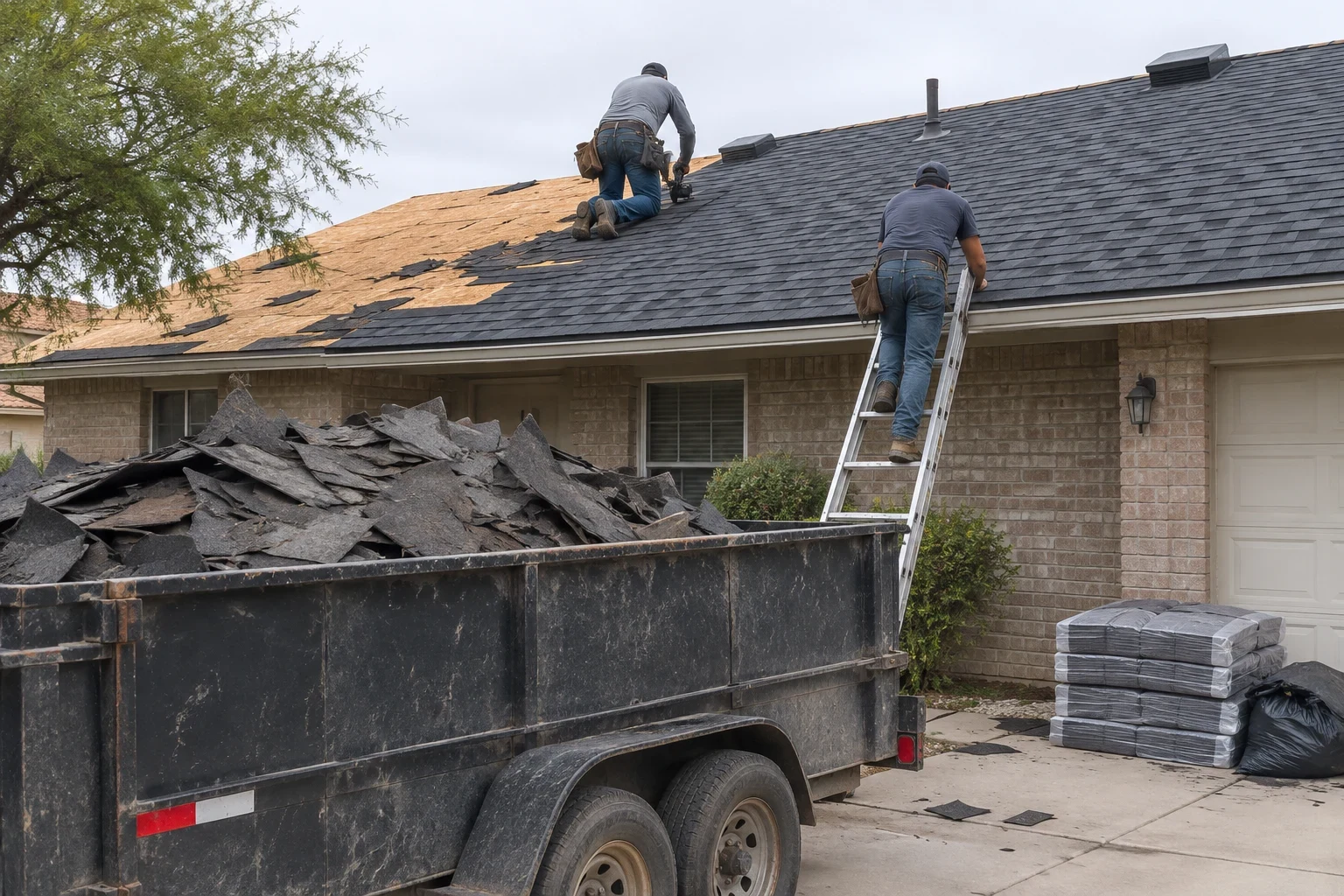
Most of the repairs we see fit into a handful of categories: felt underlayment baked brittle by years of desert sun, concrete tile that has cracked or shifted out of its course, pipe jacks and flashing that have pulled loose, and foam roofs whose coating has weathered too thin to shield the foam. A repair is the sensible choice when the damage stays in one spot and the remaining roof still has plenty of service life. When the underlayment is failing across the whole roof, we say so plainly and walk you through what a roof replacement would involve.
What a repair from us includes
Leak tracing
We look at the attic side and the roof side, follow staining on the decking and check every penetration upslope of the stain. You get photos of what we found.
Tile lift and reset
On tile roofs we remove the tile over the damaged area, stack it on the roof or a padded spot on the ground, replace the underlayment and battens as needed, then relay the original tile and swap out any broken pieces.
Flashing and penetration work
Lead and aluminum pipe jacks, roof vents, skylight curbs and valley metal are the usual weak points. We replace cracked or rusted flashing rather than smearing sealant over it, because sealant alone breaks down in the heat within a few seasons.
Shingle and flat roof patches
Lifted or cracked shingles are replaced and sealed down. On foam and flat roofs we cut out blisters and soft spots, fill with new foam or membrane and recoat so the patch is protected from UV.
Daily protection and cleanup
Tarps go over plants, patio furniture and AC units near the work area. At the end of each day we sweep the roof, run a magnetic sweeper across the driveway and yard for nails and haul the old material away.
Signs your roof needs a repair
Water marks inside
Yellow or brown rings on a ceiling, or paint that has started to bubble on a wall, show water is already in the drywall. Sealing the entry point early limits how much decking and insulation end up replaced.
Broken or slipped tile
Concrete tile cracks under foot traffic or a falling branch, and a tile can slide out of line when its fastener fails. The opening leaves the underlayment in direct sun, which breaks it down quickly.
Dried-out underlayment
Black felt showing between tiles, or felt that flakes apart in your fingers, means the waterproofing layer is close to worn out.
Bare or bubbled foam
Chalky tan foam where the coating used to be, or soft raised blisters, tell you a foam roof has lost its UV protection and may begin taking on water.
Gaps at pipe jacks and vents
Daylight around a plumbing vent when you look from the attic, or a metal collar that has split, means water has a way in at that spot.
How a repair day runs
- 1
Talk it through by phone
You describe what you are seeing and where. We ask about the roof type and age so we arrive with the right materials.
- 2
Assess and quote
We trace the leak, take photos and give you a written estimate that lists each item. If replacement makes more sense than repair, we explain why.
- 3
Protect, then open up
Before any tile comes off, we cover landscaping and anything below the work area. Removed tile is stacked so it is not chipped or lost.
- 4
Repair and test
We replace damaged underlayment, flashing or foam, relay the roofing and water-test the area when the repair calls for it.
- 5
Clean and walk through
Debris is bagged and hauled off, nails are swept up and we show you the finished work and the photos of what was replaced.
The factors behind a repair estimate
A firm number comes only after we have been up on the roof, since the true scope of a leak often shows itself once tile or shingles are lifted. Your written estimate breaks the work into separate line items, so each charge is clear. Should we find more damage partway through, we stop, show you the photos and agree on the next step with you before any extra work starts.
- Type of roofing
- Lifting and relaying concrete tile is more labor-intensive than replacing a few shingles. With foam, the cost tracks the square footage that needs fresh coating.
- Extent of the damage
- Replacing a single cracked pipe jack is a short job. Underlayment that has rotted across an entire slope calls for far more time and material.
- Condition of the decking
- Water that has seeped in for months softens the plywood or plank sheathing beneath it. Those boards have to come out and new sheathing gets fastened down before any new underlayment is laid.
- Sourcing matching tile
- Certain tile profiles and colors are no longer made and can be hard to find. Locating an exact or close match can add to the total.
Roof repair questions
Something not covered here? (623) 264-3156
Should my roof be repaired or replaced?
That comes down to how far the damage spreads. When the problem sits in one valley, one penetration or one section, a repair usually makes sense. When the underlayment is cracking and brittle over most of the roof, a patch only shifts the leak to the next weak spot, and we will be straight with you about that.
Can my existing tile go back on the roof?
Usually it can. Concrete tile tends to outlive the underlayment under it, so we lift it with care, stack it and set it back in place. Any cracked tiles are swapped for the nearest match we can source.
Is the repair covered by a warranty?
The roofing materials we install carry a 30-year manufacturer warranty through roofing material providers. We will walk you through how that coverage applies to the specific materials used on your repair.
How do you keep my yard clean during the work?
Before we start, plants and outdoor equipment near the work area get covered with tarps. Torn underlayment and broken tile go directly into bags or a bin, and a magnetic sweeper runs over the yard and driveway for stray nails at the end of every day.
Does someone have to be at the house while you work?
For the first visit, yes, ideally. Tracing a leak often means getting into the attic, so we need someone to let us in. Once the repair itself starts, nearly everything happens on the roof and outside, and we go over the finished work and photos with you afterward.
Have the leak traced to its source
Describe what you are noticing and what your roof is made of. We will tell you what is most likely behind it and set a time to come out, from Youngtown to nearby Sun City and Peoria.